The fiber optic industry is an important branch in the field of communication technology, which involves the design, manufacturing, deployment, and maintenance of optical fibers. Fiber optic, also known as optical fiber, is a type of fine wire that uses the principle of total internal reflection to transmit optical signals. It is usually composed of a central core and a peripheral cladding, with the refractive index of the core being greater than that of the cladding, allowing light energy to be transmitted in the core with extremely low loss.
Insert core is a key component in fiber optic connectors, which is used to achieve precise alignment and connection between fibers and devices. Insert cores are usually made of materials such as ceramics, metals, or plastics, and have high-precision optical surfaces. The design and manufacturing of the plug require extremely high precision to ensure the transmission quality and stability of optical signals at the connection point.
MPO/MT plug is a well-designed, high-density, and compact multi-core plastic fiber optic docking component. Its core function is to ensure precise physical connections between optical fibers.
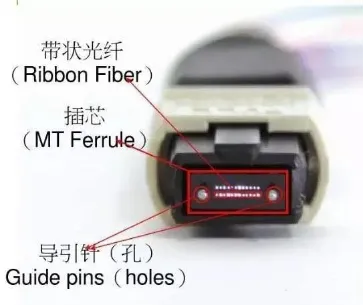
MPO/MT inserts typically contain multiple fiber channels tightly arranged in a small ceramic or plastic insert, with the internal fiber channels ensuring precise alignment of the fiber end faces through a precise alignment mechanism. This alignment is usually achieved through V-shaped slots or other types of guiding structures inside the plug, ensuring stable docking of the fiber end face during connection and disconnection, which helps reduce connection losses and improve connection reliability.
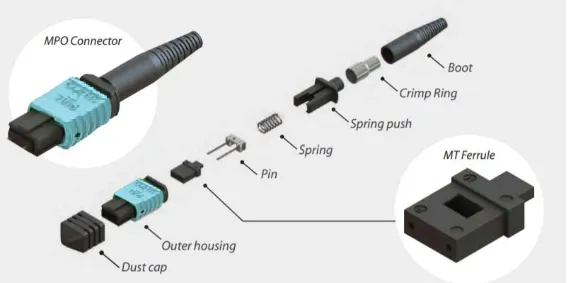
MPO/MT plug supports high-density and high-precision connections of multiple optical fibers, ensuring low loss transmission characteristics for each fiber. Therefore, it has been widely used in the production of MPO fiber connectors and the manufacturing of optical coupling devices
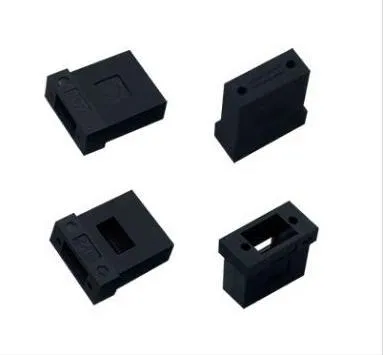
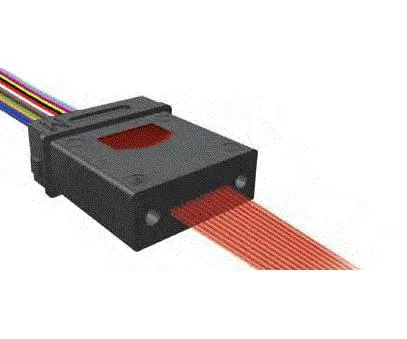
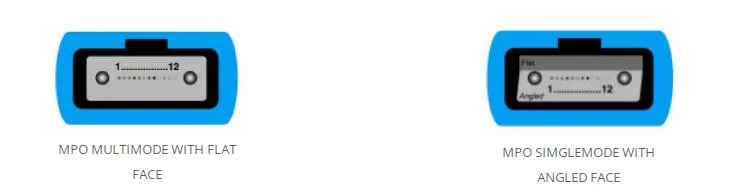
At present, MPO/MT plugs with 16 to 24 cores are the main segmented products, accounting for approximately 66% of the market share.
4-core MPO/MT plug: This is the most basic type of MT plug, suitable for small-scale fiber optic connection needs.
8-core MPO/MT plug: Provides more fiber channels than 4-core, suitable for medium-sized fiber connections.
12 core MPO/MT plug: This is currently a common type of MT plug in the market, which can support more fiber optic connections and is suitable for high-density fiber optic cabling.
16 core MPO/MT plug: With the increasing demand for data centers and high-speed communication, the use of 16 core MT plug is becoming more and more widespread.
24 core MPO/MT plug: Provides higher fiber connection density, suitable for large-scale fiber network deployment.
32 core MPO/MT plug: suitable for ultra large scale fiber optic connections, capable of supporting extremely high data transmission rates.
48 core MPO/MT plug: This is the top configuration for high-density fiber optic connections, capable of supporting extremely large fiber optic networks.
MPO/MT inserts are made of special substance filled polyphenylene sulfide (PPS). PPS filled with special substances is an ideal choice for precision tolerance molded parts, as it has minimal water absorption and a very low coefficient of linear thermal expansion. Therefore, the plug-in core can provide excellent performance and performance for all environments.
The square structure is made of PPS plastic through injection molding process, exhibiting excellent thermal stability, high mechanical strength, heat resistance, chemical corrosion resistance, flame retardancy, and excellent dimensional stability.
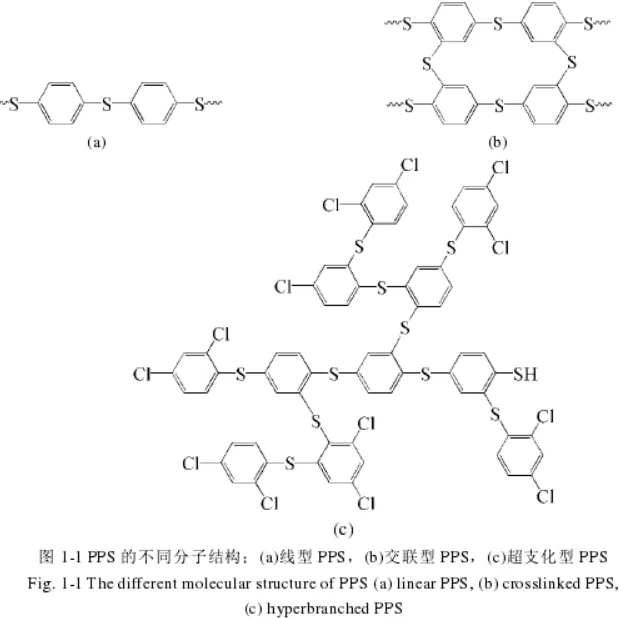
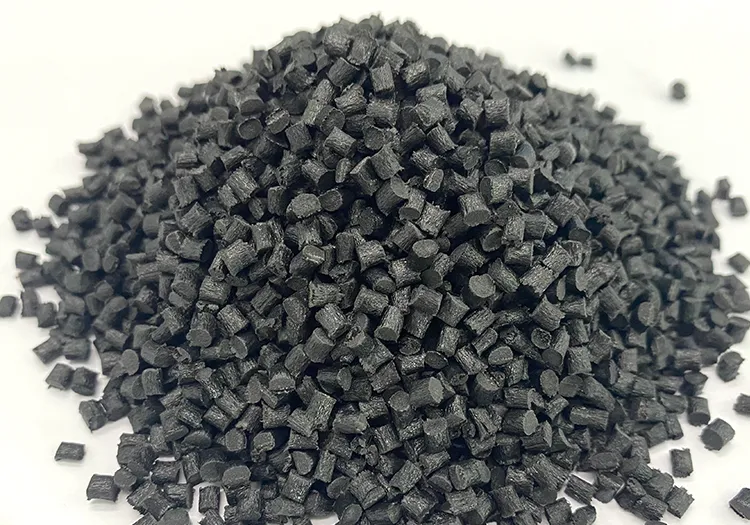
Suqing Industrial Co., Ltd. focuses on customized production of high-performance engineering plastics. Our Suzhou factory specializes in producing this high-quality special substance filled with polyphenylene sulfide (PPS).
We can also provide most functional modified types of plastics, such as thermal conductivity, conductivity, anti-static, friction resistance, scratch resistance, hydrolysis resistance, corrosion resistance, chemical corrosion resistance, ultra-high temperature, ultra-low temperature, high toughness, high impact, high modulus, high flame retardancy, etc. PA, PPS, PA46, POM, PET, PPO, PEEK, PA66 are key product lines.
If you want to customize materials for your plastic parts or replace your current plastic raw materials with equivalent quality to reduce costs, Suqing Industry may be your best choice.
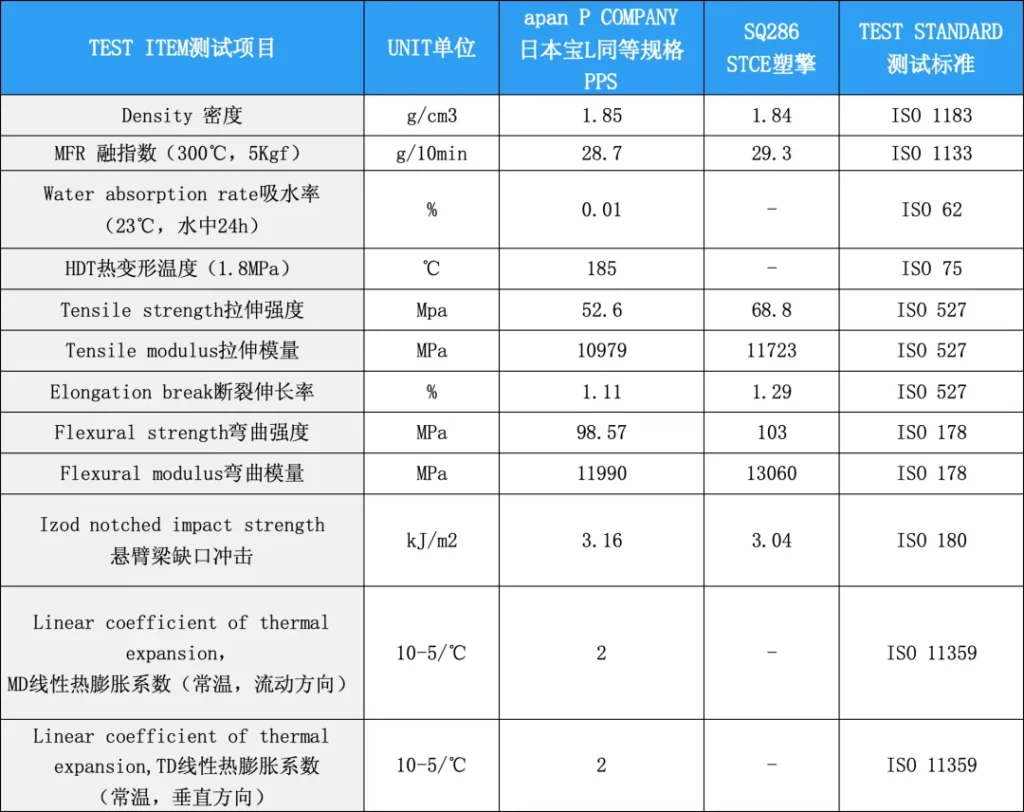
SQ286 STCE is a modified polyphenylene sulfide with a stable coefficient of thermal expansion reinforced by 70% special material. Especially suitable for pursuing ultra-high dimensional stability and ultra-high precision of products in environments such as light, heat, and electricity, it can be widely used in fields such as communication, military, and semiconductor. This product also has the advantages of corrosion resistance, hydrolysis resistance, high temperature resistance, low water absorption, and good insulation of ordinary glass fiber modified PPS.
Comprehensive comparison of physical properties
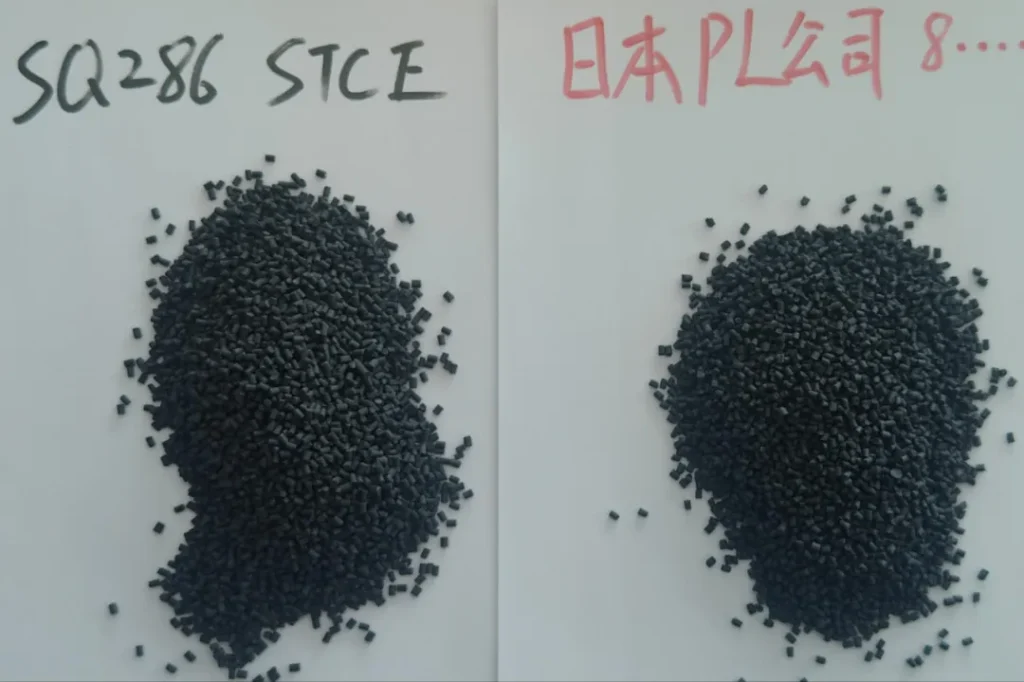
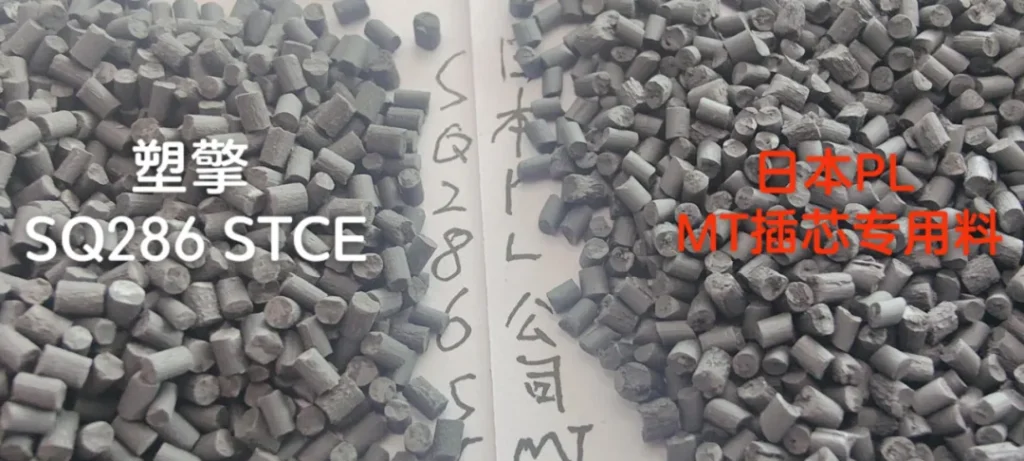
Comparison of particle appearance(No puzzle, same camera, same image, same stationary object, same time, different shooting angles and distances result in different lighting/colors)
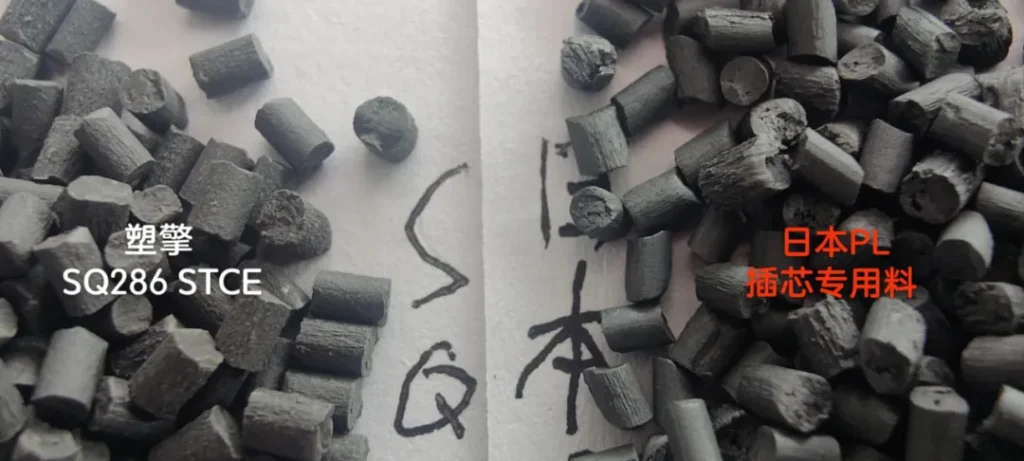
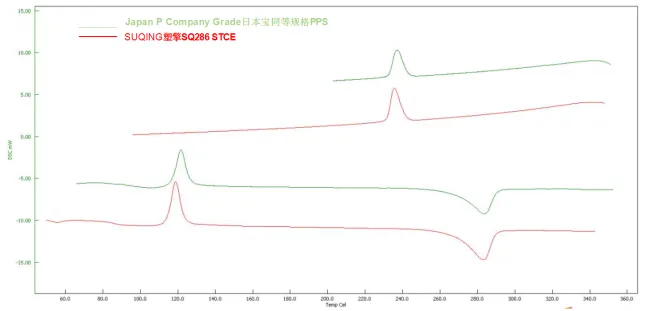
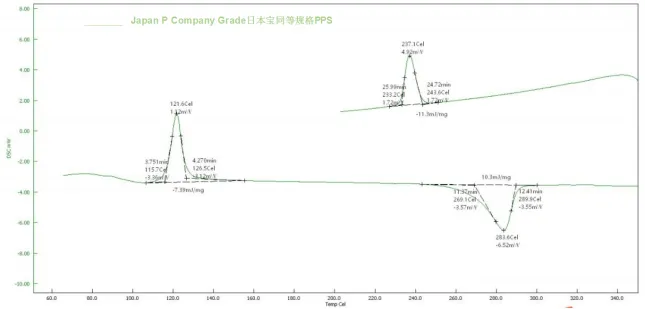
Comparison Results of Material Thermal Performance DSC (Differential Scanning Calorimetry)
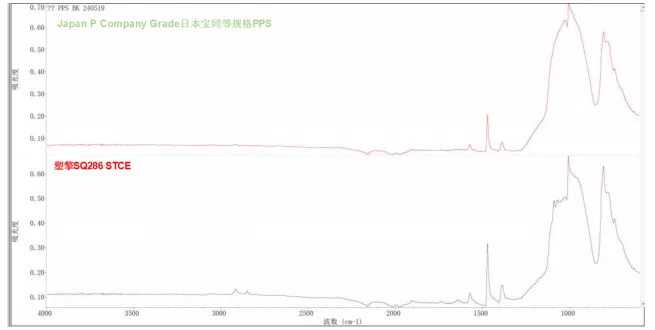
Comparison results of infrared spectra
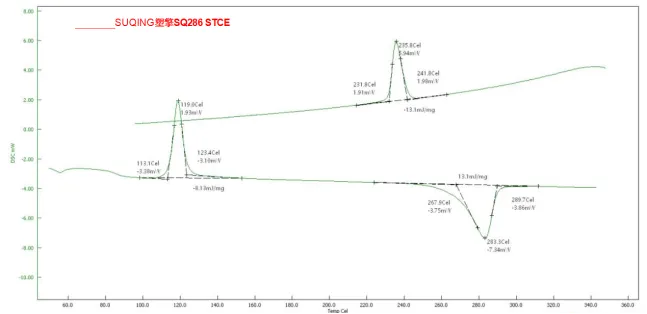
After comprehensive comparison of mechanics and thermodynamics, we conclude that the SQ286 STCE plastic engine can completely replace the equivalent specifications developed by Nippon Paint.
Advantages of SQ286 STCE plug-in special material for plastic engines
✔ Performance replacement/reliability, stable quality batch
✔ Exclusive domestic product with the same performance, short production and delivery cycle for spot goods
✔ Fast delivery time: Delivery within 10-20 working days after advance payment, and within 24 hours in emergency situations.
✔ Low minimum order quantity: 25kg/pack/time
✔ Unlimited: A single customer can also purchase 20 tons at a time
✔ No anti-dumping duties
✔ No need for customs declaration and sea freight, convenient delivery
✔ Support multi currency transactions: RMB, USD
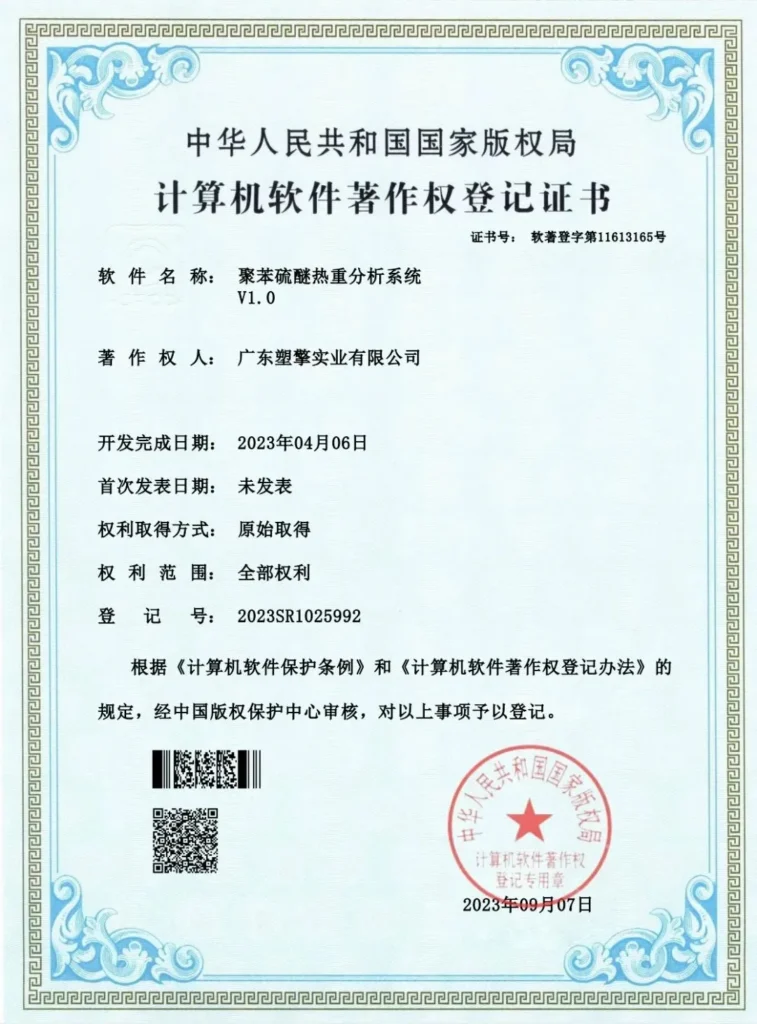
On April 6, 2023, Guangdong Suqing Industrial Co., Ltd. developed the Polyphenylene Sulfide Thermogravimetric Analysis System V1.0 and applied for computer software copyright registration.
On September 7, 2023, after being reviewed and confirmed by the China Copyright Protection Center, the copyright registration certificate was successfully obtained!
Thermogravimetric analysis, also known as thermogravimetric analysis, is a measurement technique for the mass of a substance as a function of temperature or time under program-controlled temperature conditions.
The equipment used in this technology is a thermogravimetric analyzer, which consists of three core components: temperature control unit, quality inspection unit, and data recording unit.
Through detailed analysis of the thermogravimetric curve, we can gain insights into the composition, thermal stability, decomposition behavior, and products of the sample and its potential intermediates, all of which are closely related to changes in quality.
Thermogravimetric analysis technology is closely integrated with industrial production processes, providing real-time and critical information feedback.
The main advantage of this technology lies in its high quantitation, which can accurately determine the mass change and rate of change of substances.
In the field of synthesizing polymer plastic raw materials, thermogravimetric analysis technology is widely used to evaluate the thermal stability of materials such as polyolefins, polyhalogenated olefins, oxygen-containing polymers, aromatic heterocyclic polymers, monomers, polymers, and elastomers.
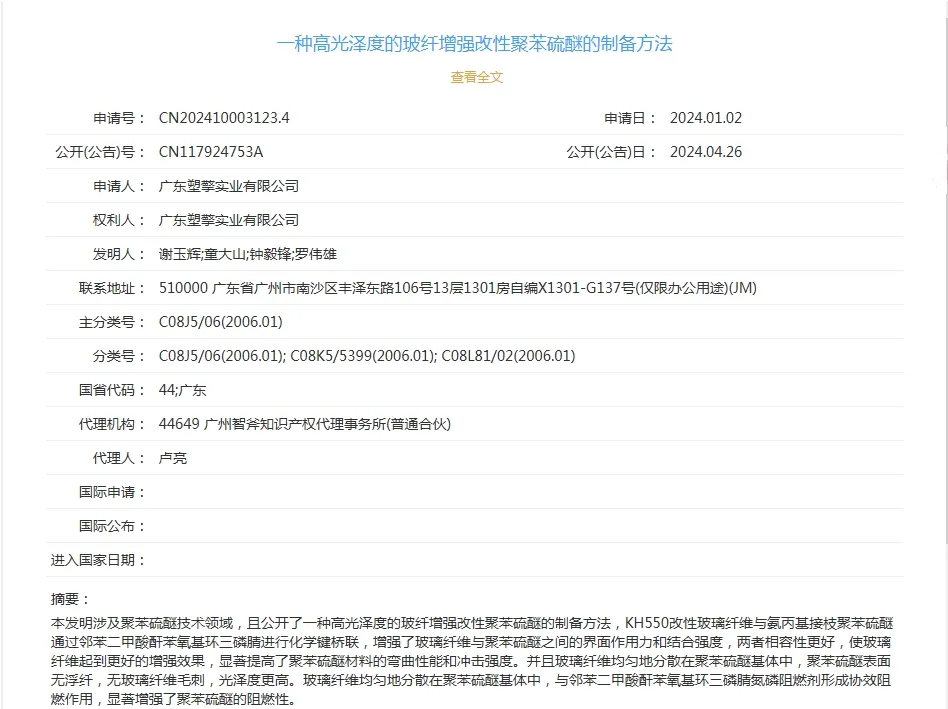
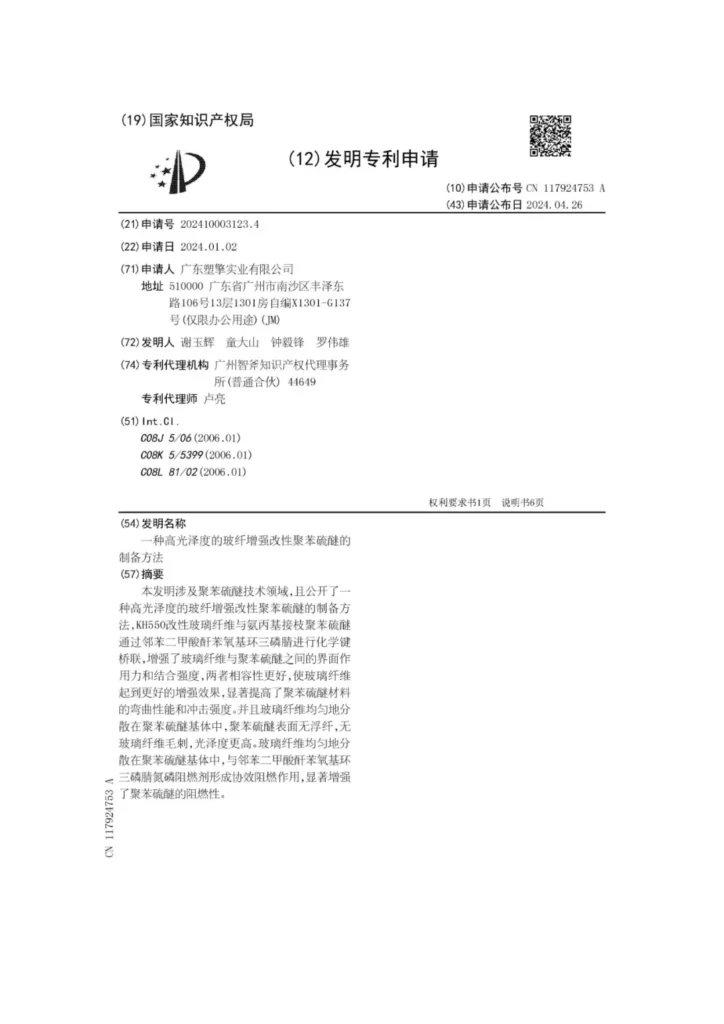
The thermogravimetric system developed by Plastic Engine this time is mainly designed for polyphenylene sulfide.